§ Introduction
Valefor's entry feels less like a cosmic villain and more like an old-world warning label: "Yes, he's helpful. Yes, he'll ruin you." The Goetia often frames spirits as transactional forces, and Valefor is the archetype of aid that erodes your judgment.
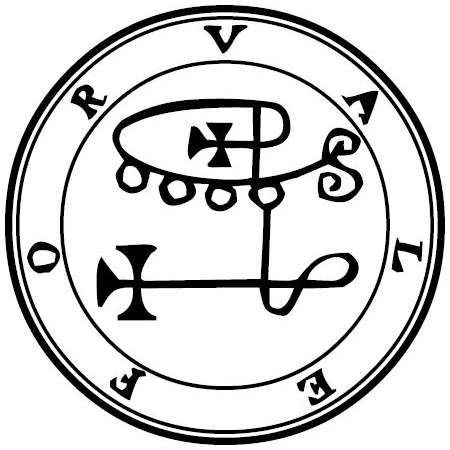
§ Valefor's Sigil as Cultural Artifact (Non-Instructional)
In grimoire tradition, seals function as identifiers—visual signatures tied to a spirit's name inside a manuscript catalog. People engage with them today as historical graphics, occult art, or symbolic motifs. This page presents Valefor's seal as historical and symbolic reference, with no claims of efficacy.
§ Rank and Authority
Rank: Duke
Legions: 10
Goetic ranks mirror human bureaucracy—an attempt to map invisible forces using familiar political language.
§ Appearance (Traditional Description)
The Ars Goetia description gives Valefor a striking form: a lion with an ass's head, bellowing. Symbolically, it's a mash-up of authority (lion) and stubborn or foolish impulse (ass)—exactly the kind of contradiction you'd expect from a figure associated with temptation.
§ Powers and Attributions (Historical Claims)
Classical text tradition attributes to Valefor:
- Being a "good familiar"
- Tempting the associated person to steal
- Governing 10 legions
Symbolic reading (modern): trust tests, moral compromise, "small" boundary breaks that snowball.
§ Practical Use as Cultural Context (Non-Instructional)
Valefor is a snapshot of early modern obsession with crime, punishment, and reputation. In tightly policed societies, theft wasn't just "property loss"—it threatened survival, status, and social order. The "good familiar until caught" framing works like a parable: bad incentives feel supportive right up to the moment they don't.
This is useful as cultural history—and as a symbolic mirror for anyone navigating risky peer pressure, shortcuts, or the seductive logic of "just this once."
§ Frequently Asked Questions About Valefor (Ars Goetia)
How do you pronounce Valefor?
Common pronunciations include "VAL-eh-for" or "VAL-eh-far." Manuscripts don't standardize pronunciation.
Is Valefor "good" or "evil"?
The Goetia calls him a "good familiar" while explicitly warning about temptation to steal—so the text itself frames him as helpful and hazardous.
Does this page provide instructions related to theft or wrongdoing?
No. This page is descriptive and symbolic, and does not encourage illegal or harmful behavior.
Where does the description come from?
A widely circulated public-domain Goetia text includes Valefor as the sixth spirit with the lion/ass description, the "good familiar" line, and the warning about theft.
§ Short Sources (Pre-1900)
- Johann Weyer — Pseudomonarchia Daemonum (1577)
- Reginald Scot — The Discoverie of Witchcraft (1584)
- Lemegeton Clavicula Salomonis — Ars Goetia (17th-century manuscript tradition; pre-1900 transmission)
- Jacques Collin de Plancy — Dictionnaire Infernal (1818; illustrated ed. 1863)
This article is a historical summary of public-domain grimoire material. It does not provide ritual instructions or claim supernatural efficacy.
Quick Reference
Number:
6th Spirit
Rank:
Duke
Legions:
10
Appearance:
Lion with an ass's head; bellowing (traditional description)
Historical Powers:
"good familiar," temptation toward theft (traditional text framing)