§ Introduction
Sitri is one of the Goetia's most psychologically revealing figures: a spirit explicitly linked to desire, attraction, and the stripping-away of secrets. In historical moral terms, he's framed as dangerous because he collapses the distance between impulse and action—and because he turns private things public.
§ Sitri's Sigil as Cultural Artifact (Non-Instructional)
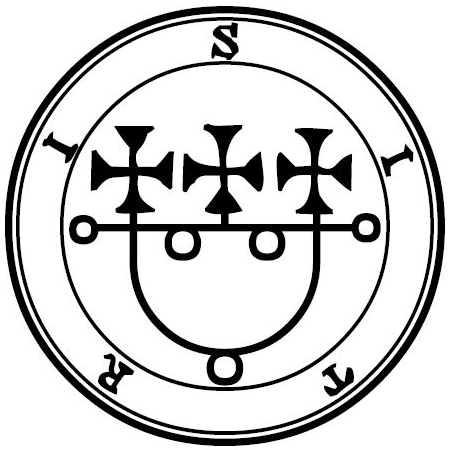
In the grimoire tradition, seals function as identifiers—visual signatures tied to a spirit's name inside a manuscript catalog. Today they're often studied as historical graphics, occult art motifs, or symbolic design elements. This page presents Sitri's seal as historical/symbolic reference only, without claims of efficacy.
§ Rank and Authority
Rank: Great Prince
Legions: 60
In demonological catalogs, ranks reflect spiritual bureaucracy—early modern writers explaining invisible forces using the language of courts and command.
§ Appearance (Traditional Description)
Form: Leopard-faced, griffin-winged; in human shape, "very beautiful."
Symbolically, that's a neat bundle: predatory elegance (leopard), airborne intensity (griffin wings), and social charm (beautiful human guise). The shift between beast and beauty captures how attraction can feel both dangerous and irresistible.
§ Powers and Attributions (Historical Claims)
Classical text tradition attributes to Sitri:
- Inflames attraction/desire between people
- Shifts between a bestial and alluring human appearance
- Associated with revelation of secrets (often framed as mocking/exposing)
Symbolic reading (modern): lust as a force that makes people reckless, visible, and manipulable; the psychology of attraction and exposure.
§ Practical Use as Cultural Context (Non-Instructional)
In historical moral terms, Sitri is framed as dangerous because he collapses the distance between impulse and action—and because he turns private things public. Modern non-ritual framing: useful archetype for studying how desire works—advertising psychology, attachment patterns, shame dynamics, and the social consequences of exposure.
§ Frequently Asked Questions About Sitri (Ars Goetia)
How do you pronounce Sitri?
Common modern pronunciations include "SIT-ree" or "SEE-tree." Manuscripts don't standardize pronunciation.
Is Sitri the same as Bitru or Sytry?
Yes—these are alternate spellings found in various manuscript traditions. The variations reflect normal transmission drift.
What does Sitri represent?
In the grimoire tradition, Sitri represents desire, attraction, and the revelation of secrets—a cautionary emblem about lust making people reckless and visible.
Does this page provide ritual instructions?
No. This is a historical/symbolic summary and does not claim supernatural efficacy.
§ Short Sources (Pre-1900)
- Johann Weyer — Pseudomonarchia Daemonum (1577)
- Reginald Scot — The Discoverie of Witchcraft (1584)
- Lemegeton Clavicula Salomonis — Ars Goetia (17th-century manuscript tradition; pre-1900 transmission)
- Jacques Collin de Plancy — Dictionnaire Infernal (1818; illustrated ed. 1863)
This article is a historical summary of public-domain grimoire material. It does not provide ritual instructions or claim supernatural efficacy.
Quick Reference
Number:
12th Spirit
Rank:
Great Prince
Legions:
60
Appearance:
Leopard-faced, griffin-winged / Beautiful human
Historical Powers:
Inflames desire, reveals secrets, shapeshifts between beast and beauty