§ Introduction
Gusoin—more commonly spelled Gusion in later lists—is a Goetic figure with a surprisingly "administrative" portfolio: answers, interpretation, diplomacy, and status distribution. If some spirits are framed like storms, Gusion is framed like a court adviser who speaks in bullet points.
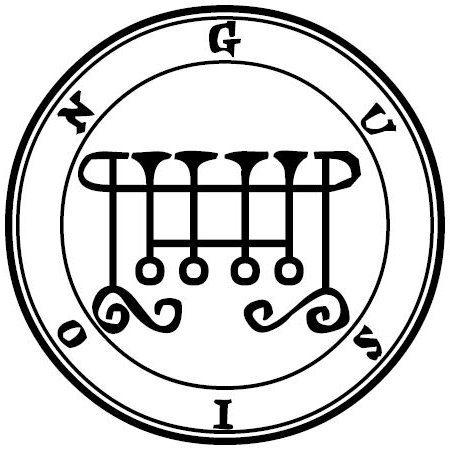
§ Gusion's Sigil as Cultural Artifact (Non-Instructional)
In the grimoire tradition, seals function as identifiers—visual signatures tied to a spirit's name inside a manuscript catalog. Today they're often studied as historical graphics, occult art motifs, or symbolic design elements. This page presents Gusion's seal as historical/symbolic reference only, without claims of efficacy.
§ Rank and Authority
Rank: Great Duke
Legions: 40
In demonological catalogs, ranks reflect spiritual bureaucracy—early modern writers explaining invisible forces using the language of courts and command.
§ Appearance (Traditional Description)
In Scot's public-domain summary, Gusoin is said to appear in a form described as a "Xenophilus." That odd label (and the general inconsistency across manuscripts) is a good reminder: these catalogues often preserve copying errors, folk taxonomy, and scribal weirdness as much as they preserve "lore."
§ Powers and Attributions (Historical Claims)
Classical text tradition attributes to Gusion:
- Answers things past/present/future
- Explains questions (interpretive skill is his brand)
- Reconciles friendships / settles disputes
- Grants honors and dignities (status, recognition, appointments)
Symbolic reading (modern): clarification, negotiation prep, conflict mediation, and "what is the actual question we're trying to answer?"
§ Practical Use as Cultural Context (Non-Instructional)
Gusion reads like a spirit of clarification—the one you consult when confusion is the real enemy. Modern non-ritual framing: great archetype for negotiation prep, conflict mediation, career narrative strategy, and the discipline of asking the right question before seeking answers.
§ Frequently Asked Questions About Gusion (Ars Goetia)
How do you pronounce Gusion?
Common modern pronunciations include "GOO-see-on" or "GOO-zhon." Manuscripts don't standardize pronunciation.
Is Gusion the same as Gusoin?
Yes—Gusoin is an alternate spelling found in various manuscript traditions. The variations reflect normal transmission drift.
What does Gusion do?
The grimoire tradition frames him as an oracle and diplomat: answering questions, reconciling disputes, and distributing status/honors.
Does this page provide ritual instructions?
No. This is a historical/symbolic summary and does not claim supernatural efficacy.
§ Short Sources (Pre-1900)
- Johann Weyer — Pseudomonarchia Daemonum (1577)
- Reginald Scot — The Discoverie of Witchcraft (1584)
- Lemegeton Clavicula Salomonis — Ars Goetia (17th-century manuscript tradition; pre-1900 transmission)
- Jacques Collin de Plancy — Dictionnaire Infernal (1818; illustrated ed. 1863)
This article is a historical summary of public-domain grimoire material. It does not provide ritual instructions or claim supernatural efficacy.
Quick Reference
Number:
11th Spirit
Rank:
Great Duke
Legions:
40
Appearance:
"Xenophilus" form
Historical Powers:
Answers past/present/future, interprets questions, reconciles friendships, grants honors