§ Introduction
Leraje is an aggressively specific spirit: not "war" in general, but conflict sparked and sustained, and especially the corruption of wounds made by arrows. He's basically the patron of the grim truth that some fights don't end when the battle ends—they rot afterward.
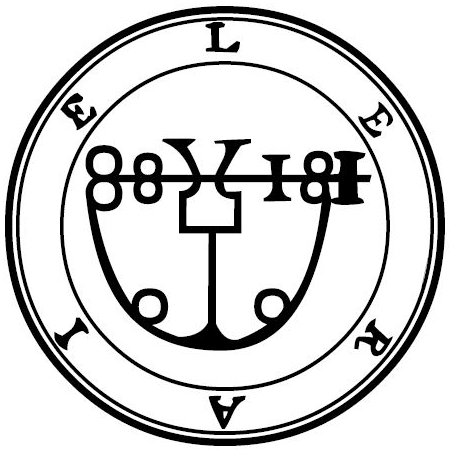
§ Leraje's Sigil as Cultural Artifact (Non-Instructional)
In the grimoire tradition, seals function as identifiers—visual signatures tied to a spirit's name inside a manuscript catalog. Today they're often studied as historical graphics, occult art motifs, or symbolic design elements. This page presents Leraje's seal as historical/symbolic reference only, without claims of efficacy.
§ Rank and Authority
Rank: Great Marquis
Legions: 30
In demonological catalogs, ranks reflect spiritual bureaucracy—early modern writers explaining invisible forces using the language of courts and command.
§ Appearance (Traditional Description)
Form: Archer, bow, quiver.
Symbolically, Leraje is "conflict at range": harm delivered from a distance—rumors, politics, rivalries, and delayed consequences. The archer imagery captures the idea of strikes that land before anyone sees them coming.
§ Powers and Attributions (Historical Claims)
Classical text tradition attributes to Leraje:
- Incites or authors battles/conflicts
- Causes arrow wounds to worsen/putrefy (a period image of infection and inevitability)
- Rules 30 legions
Symbolic reading (modern): conflict spirals, long-tail harm, reputation damage, and "a small hit that becomes a big problem."
§ Practical Use as Cultural Context (Non-Instructional)
A wartime nightmare translated into spirit-catalog language: infection, escalation, and the "afterlife" of violence. Modern non-ritual framing: useful archetype for studying conflict spirals, long-tail harm, reputation damage, and understanding how small wounds become big problems.
§ Frequently Asked Questions About Leraje (Ars Goetia)
How do you pronounce Leraje?
Common modern pronunciations include "leh-RAH-zhay" or "LEH-rah-jay." Manuscripts don't standardize pronunciation.
Is Leraje the same as Leraie or Oray?
Yes—these are alternate spellings found in various manuscript traditions. The variations reflect normal transmission drift.
What does Leraje represent?
In the grimoire tradition, Leraje represents conflict instigation and the corruption of wounds—a figure for understanding how damage compounds over time.
Does this page provide ritual instructions?
No. This is a historical/symbolic summary and does not claim supernatural efficacy.
§ Short Sources (Pre-1900)
- Johann Weyer — Pseudomonarchia Daemonum (1577)
- Reginald Scot — The Discoverie of Witchcraft (1584)
- Lemegeton Clavicula Salomonis — Ars Goetia (17th-century manuscript tradition; pre-1900 transmission)
- Jacques Collin de Plancy — Dictionnaire Infernal (1818; illustrated ed. 1863)
This article is a historical summary of public-domain grimoire material. It does not provide ritual instructions or claim supernatural efficacy.
Quick Reference
Number:
14th Spirit
Rank:
Great Marquis
Legions:
30
Appearance:
Gallant archer with bow and quiver
Historical Powers:
Authors battles, causes arrow wounds to putrefy