§ Introduction
Eligor is one of the Goetia's most "tactical" dukes: a spirit tied to wars, outcomes, strategy, and the favor of powerful people. He reads like an infernal consultant for battlefield logistics—less berserker, more staff officer.
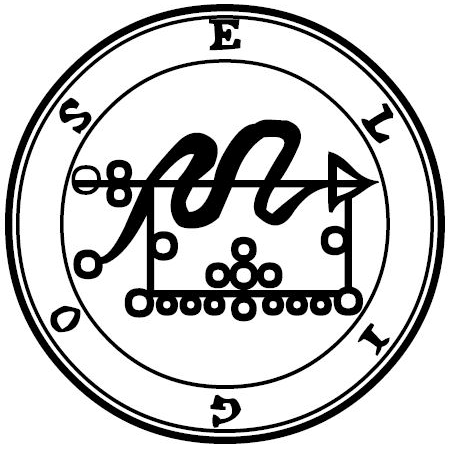
§ Eligos's Sigil as Cultural Artifact (Non-Instructional)
In the grimoire tradition, seals function as identifiers—visual signatures tied to a spirit's name inside a manuscript catalog. Today they're often studied as historical graphics, occult art motifs, or symbolic design elements. This page presents Eligos's seal as historical/symbolic reference only, without claims of efficacy.
§ Rank and Authority
Rank: Great Duke
Legions: 60
In demonological catalogs, ranks reflect spiritual bureaucracy—early modern writers explaining invisible forces using the language of courts and command.
§ Appearance (Traditional Description)
Form: "Goodly knight" with military emblems (lance, ensign, scepter).
Symbolically, Eligos is warfare as institution—banners, hierarchy, planning, and the politics of who gets backed. The knight imagery emphasizes order, discipline, and strategic authority.
§ Powers and Attributions (Historical Claims)
Classical text tradition attributes to Eligos:
- Reveals hidden things
- Knowledge of wars and strategic meetings of soldiers
- Procures favor of nobles/knights
- Commands 60 legions
Symbolic reading (modern): competitive analysis, negotiation posture, stakeholder mapping, and seeing the "real battlefield" inside organizations.
§ Practical Use as Cultural Context (Non-Instructional)
A spirit representing "competitive advantage" and the machinery of power. Modern non-ritual framing: useful archetype for strategic thinking—competitive analysis, negotiation posture, stakeholder mapping, and understanding the hidden dynamics of organizations.
§ Frequently Asked Questions About Eligos (Ars Goetia)
How do you pronounce Eligos?
Common modern pronunciations include "EL-ih-goss" or "eh-LEE-goss." Manuscripts don't standardize pronunciation.
Is Eligos the same as Eligor or Abigor?
Yes—these are alternate spellings found in various manuscript traditions. The variations reflect normal transmission drift.
What does Eligos represent?
In the grimoire tradition, Eligos represents strategic warfare, hidden intelligence, and the favor of powerful people—a figure for understanding power dynamics and competitive advantage.
Does this page provide ritual instructions?
No. This is a historical/symbolic summary and does not claim supernatural efficacy.
§ Short Sources (Pre-1900)
- Johann Weyer — Pseudomonarchia Daemonum (1577)
- Reginald Scot — The Discoverie of Witchcraft (1584)
- Lemegeton Clavicula Salomonis — Ars Goetia (17th-century manuscript tradition; pre-1900 transmission)
- Jacques Collin de Plancy — Dictionnaire Infernal (1818; illustrated ed. 1863)
This article is a historical summary of public-domain grimoire material. It does not provide ritual instructions or claim supernatural efficacy.
Quick Reference
Number:
15th Spirit
Rank:
Great Duke
Legions:
60
Appearance:
Goodly knight with lance, ensign, scepter
Historical Powers:
Reveals hidden things, war strategy, procures favor of nobles