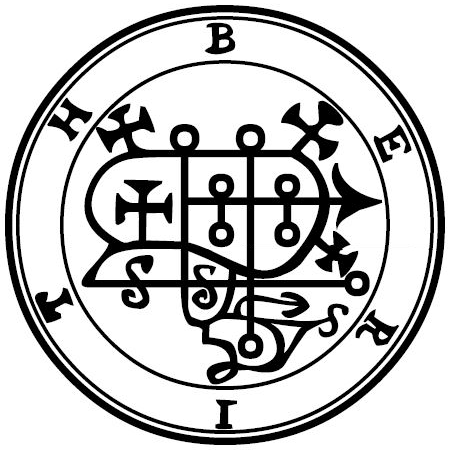
§ Introduction
Berith is traditionally listed as the 28th spirit and ranked as a Great Duke. In the old catalogues, he's a magnet for three themes that obsessed Renaissance readers: transmutation (alchemy), social rank, and information that sounds reliable. Berith is also one of those entries where the texts repeatedly warn, in their own moral language, that clever answers can slide into deception.
§ Grimoire Profile
Rank: Duke
Legions: 26
Attributed office: "true answers," turning metals to gold, giving dignities/status
§ Appearance (Traditional Description)
He is commonly depicted as a soldier in red, crowned, riding a red horse—a visual shorthand for power, aggression, and high-stakes bargaining.
§ Powers and Attributions
Traditional lists associate Berith with:
- Knowledge of past, present, and future (framed as "true answers")
- Alchemy/transmutation motifs (metals into gold)
- Granting dignities (titles, recognition, elevation)
§ Practical Use (Historical / Educational)
Berith reflects a period where alchemy was part chemistry, part philosophy, part spiritual metaphor—and where status could decide whether you lived safely or not.
Symbolically (non-ritual), Berith fits: the psychology of "get rich / get elevated" temptations, hype vs. truth in persuasion, ambition management: when desire for rank overrides judgment.
§ Pop Culture Footprints
Berith/Baal-Berith appears across modern demon lists and fantasy settings as an "infernal alchemist" or "status broker" archetype.
§ Short Sources
- Johann Weyer — Pseudomonarchia Daemonum (1577)
- Reginald Scot — The Discoverie of Witchcraft (1584)
- Jacques Collin de Plancy — Dictionnaire Infernal (1863 illustrated edition)