Minor Arcana – Five of Swords
Five of Swords
Upright Meaning
Conflict leaves everyone wounded. Sometimes retreat is the wiser path.
Keywords: conflict, defeat, tension
Reversed Meaning
Reversed, reconciliation or letting go of conflict becomes possible. Choose peace over being right.
Keywords: reconciliation, resolution, moving on
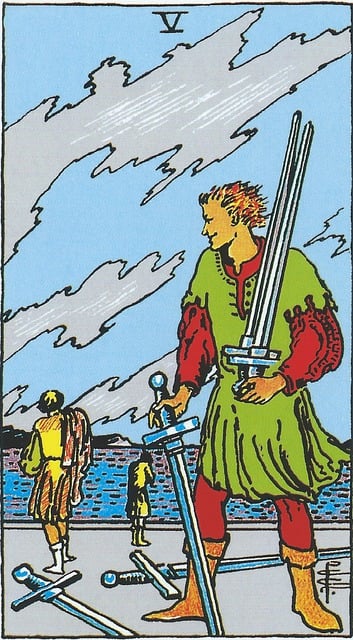
The Five of Swords represents conflict, defeat, and the hollow feeling of victory won at too high a cost. This card appears in situations where winning has cost you relationships, integrity, or peace of mind. The Five of Swords asks difficult questions: What are you fighting for? Is winning worth what you're losing? Sometimes the wisest action is to walk away from battle rather than winning at all costs. This is one of the most complex and morally challenging cards in the tarot deck.
The traditional Rider-Waite imagery shows a figure holding three swords with a satisfied smirk while two other figures walk away in defeat, leaving their swords behind. Storm clouds gather overhead. The victor has won the battle but appears isolated and unsympathetic. The defeated figures suggest that relationships have been damaged or destroyed in the process of winning. This card captures the emptiness of victory that costs more than it's worth.
Upright Meaning: The Cost of Victory
In its upright position, the Five of Swords represents conflict where winning comes at a significant cost. You may have proven yourself right, defeated an opponent, or gotten your way—but the relationships damaged or values compromised in the process leave you feeling hollow rather than victorious. This card asks whether being "right" was worth being alone.
The Five of Swords upright can indicate hostile conflict characterized by a win-lose mentality where compromise seems impossible. Both sides are so invested in winning that they've lost sight of what they're fighting for or what really matters. This card often appears in situations where ego and the need to be right have overtaken more important considerations like relationship, compassion, or long-term consequences.
This card can represent bullying, manipulation, or using underhanded tactics to gain advantage. Someone may be "winning" by means that violate ethics or fairness. The Five of Swords doesn't always position you as the victor—sometimes you're one of the figures walking away in defeat, and this card acknowledges the pain of being overpowered or outsmarted by someone willing to fight dirty.
The Five of Swords upright often suggests that it's time to walk away from conflict rather than continuing to engage. Not every battle needs to be fought, and not every wrong needs to be righted. Sometimes the most powerful response to hostility is refusal to participate. This card can be permission to choose peace over victory, to let someone else have the "win" if it means preserving your integrity or sanity.
On a deeper level, the Five of Swords asks you to examine your motives in conflict. Are you fighting for something that truly matters, or are you fighting to feed your ego? Are you defending legitimate boundaries, or are you simply refusing to be "wrong" regardless of the cost? This card suggests that self-awareness about why you fight is crucial to knowing when to fight and when to walk away.
The Five of Swords can also represent the aftermath of conflict—dealing with the consequences of harsh words, broken relationships, or ethical compromises made in the heat of battle. This card asks you to face what you've done or said in conflict and to consider whether repair is possible or whether you must live with the permanent cost of your choices.
Reversed Meaning: Reconciliation and Picking Battles
When the Five of Swords appears reversed in a tarot reading, it suggests that conflict is ending or that there's an opportunity for reconciliation. Someone may be ready to make amends, to admit wrongdoing, or to extend an olive branch after a period of hostility. The reversed position indicates a shift from combative to cooperative energy.
The Five of Swords reversed can indicate that you're learning to pick your battles more wisely. Not every slight requires response, not every wrong needs to be righted, and not every argument needs to be won. This card suggests developing discernment about what's worth fighting for and what's worth releasing.
This reversed card can also represent making amends after having "won" at too high a cost. You may be realizing that your victory was hollow and that relationships or integrity matter more than being right. The Five of Swords reversed encourages humility, apology, and genuine attempts to repair what was damaged in conflict.
In some cases, the Five of Swords reversed suggests admitting defeat gracefully. You may be recognizing that continuing to fight serves no purpose and that accepting loss with dignity is more powerful than fighting a losing battle forever. This card can represent the wisdom of knowing when to surrender.
The reversed Five of Swords can warn against continuing patterns of destructive conflict. If you find yourself repeatedly in hostile situations where winning requires ethical compromise or relationship damage, this card asks you to examine your role in creating these dynamics. What are you defending so fiercely? Why is winning so important? What would change if you approached conflict differently?
This card reversed can also indicate lingering resentment after conflict has formally ended. Someone may still be holding a grudge, replaying old arguments, or waiting for revenge. The Five of Swords reversed encourages true forgiveness and release rather than surface peace covering unresolved hostility.
The Five of Swords in Love and Relationships
In matters of love, the Five of Swords upright is a difficult card indicating serious conflict in relationships. Arguments may have become hostile, with both partners more interested in winning than in understanding. Words may have been said that cannot be unsaid, and the damage may be irreparable. This card warns that keeping score, demanding to be right, or using manipulation destroys intimacy.
The Five of Swords can represent relationships where one partner consistently dominates or "wins" arguments through superior verbal skills, intimidation, or manipulation. This dynamic creates resentment and erodes the foundation of mutual respect necessary for healthy relationship. This card asks both partners to consider whether being "right" is worth losing the relationship.
This card can also indicate that it's time to walk away from a relationship characterized by constant conflict. Not every relationship can or should be saved. Sometimes love isn't enough if respect, fairness, and kindness are absent. The Five of Swords can be permission to end a relationship that has become primarily about winning and losing rather than partnership.
For single people, the Five of Swords can suggest still carrying wounds from past relationship conflicts. You may be defensive, expecting hostility, or entering new relationships with a combative stance because previous partners taught you that relationships are battlegrounds.
When reversed in love readings, the Five of Swords indicates that there's an opportunity to repair relationship damage and to shift from combat to cooperation. Both partners may be ready to communicate more constructively and to prioritize relationship over individual victories.
The Five of Swords in Career and Finances
In career readings, the Five of Swords upright indicates workplace conflict, office politics, or professional situations where winning comes at the cost of relationships or reputation. You may be in a competitive environment where colleagues view each other as adversaries rather than teammates. This card warns that professional success gained through underhanded tactics or at the expense of others ultimately feels hollow.
The Five of Swords can represent bullying in the workplace, hostile work environments, or situations where you must decide whether to fight back, report unethical behavior, or simply walk away. This card doesn't always provide clear answers but encourages you to consider what you're willing to compromise and what lines you won't cross.
This card can also indicate that you've won a professional battle but damaged important relationships in the process. You may have been proven right, gotten the promotion, or defeated a rival—but the cost in terms of team morale, professional reputation, or ethical compromise may be higher than anticipated.
The Five of Swords can suggest that walking away from a toxic work situation is the most powerful choice available. Not every professional battle is worth fighting, and sometimes preserving your integrity or wellbeing requires leaving rather than winning.
Financially, the Five of Swords upright can warn against financial dealings where winning means someone else must lose significantly. This card encourages ethical financial practices and cautions against gains that come from exploitation or unfair advantage.
When reversed in career contexts, the Five of Swords suggests that workplace conflicts are resolving or that you're learning to navigate office politics more skillfully. You may be developing better judgment about when to assert yourself and when to let things go.
Keywords and Symbolism
Upright: Conflict, defeat, winning at all costs, empty victory, hostility, walking away, unfair tactics, self-interest, ego battles, hollow success
Reversed: Reconciliation, making amends, picking battles wisely, ending conflict, forgiveness, graceful defeat, learning lessons, release, moving past ego
Element: Air | Astrological Association: Venus in Aquarius
Ready for Your Own Tarot Reading?
Open the Tarot Book, hold your question in mind, and discover the card that speaks to you.
Open Tarot BookRelated Tarot Cards
This tarot book is for reflection and entertainment, not professional, financial, or medical advice.